Home › Common Problems › Granule Loss and Shingle Deterioration
Granule Loss and Shingle Deterioration
in Charlotte, NC
When asphalt shingles lose their granules, the roof is past its useful life. Charlotte's intense summer sun, heavy downpours, and extreme surface temperatures all speed up that process. A lot of the housing built in Huntersville, Concord, and Indian Trail during the late 1990s and early 2000s is now reaching the end of its original shingle life. Once the granules are gone, the bare asphalt cracks and can no longer shed water.
Charlotte Roof Repair Pros helps Charlotte, NC homeowners fix granule loss and shingle deterioration — call for a free inspection.
Quick Answer
Shingles lose their granules when years of Charlotte's intense sun and heavy downpours wear them down. Many homes built in Huntersville and Concord during the late 1990s are hitting that point right now. Once granules wash off, bare asphalt cracks and lets water in quickly. Call for an inspection if you see grainy black grit piling up in your gutters or downspouts.
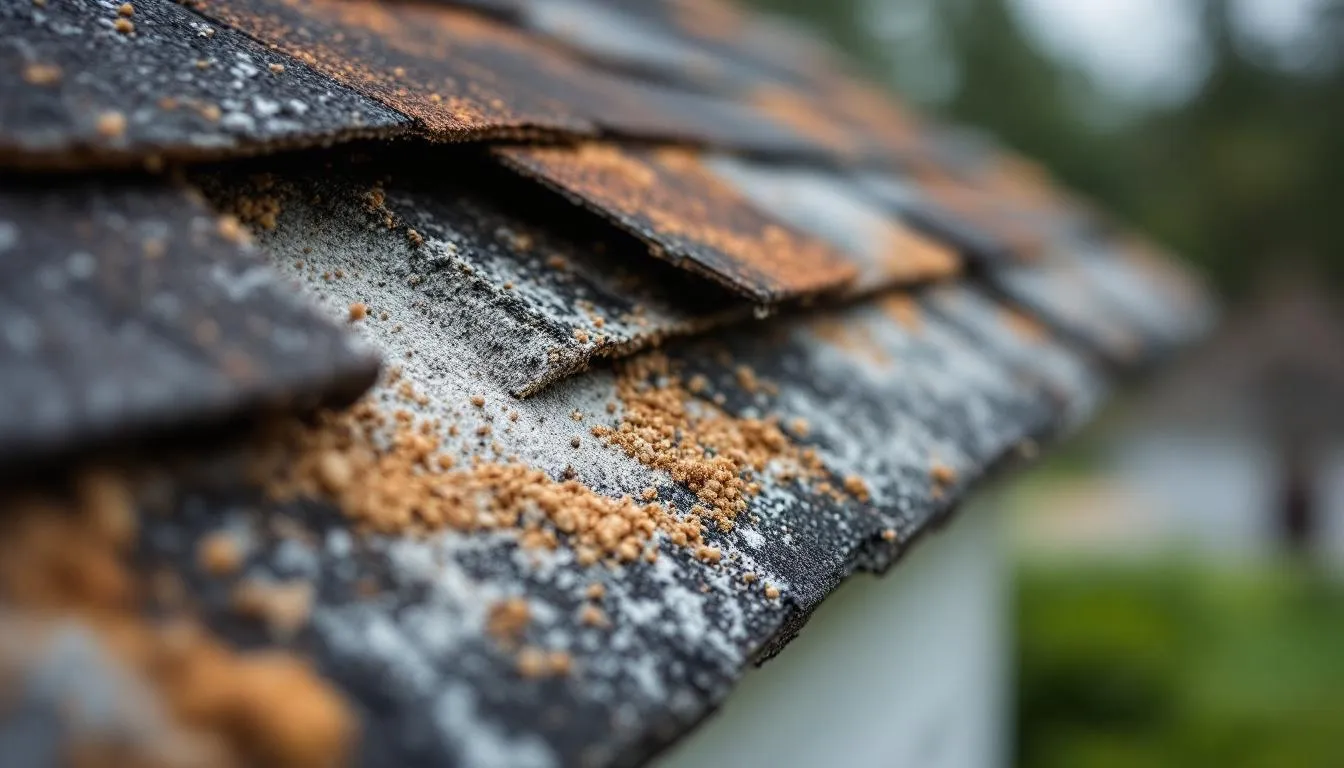
Telltale Signs
Warning Signs to Watch For
- Significant granule accumulation in gutters or at the base of downspouts
- Dark, bald patches or exposed asphalt mat visible on shingle surfaces from the ground
- Shingles that appear uneven in color — darker where granules remain, lighter where lost
- Shingles cracking, curling at the edges, or developing surface blisters
- Increased frequency of minor leaks during heavy rainfall events
- Shingle surface feels rough and brittle when pressed rather than flexible
Root Causes
What Causes Granule Loss and Shingle Deterioration?
UV and Thermal Degradation
Charlotte gets about 213 sunny days per year. South- and west-facing roof surfaces regularly hit 150 to 160°F during summer afternoons. That heat breaks down the asphalt binder, which is the material that holds the granules onto the shingle surface. Once the binder loses its grip, granules wash off with every rain and the asphalt mat underneath is left exposed.
The Fix
Full Roof Replacement with Architectural Shingles
The old shingles are torn off completely. New architectural asphalt shingles go on with fresh underlayment and starter strips. Everything is installed to current North Carolina building code standards.
Hail Impact Damage
The Piedmont Carolinas get hit by several significant hail events every year. Most of the action happens in spring and early summer. Even small hailstones under one inch can crack the granule layer. Granules are the small mineral chips bonded to the surface of each shingle. They wash off in the next rain, leaving bare spots scattered across the roof.
The Fix
Hail Damage Assessment and Targeted Replacement
The roof gets inspected in a grid pattern to find every impact point. That tells us whether to replace a section or do a full re-roof. The findings are documented to help with any insurance claim.
Manufacturing Defect or Early-Generation Product
Some Charlotte homes got early organic-mat asphalt shingles in the late 1990s. Those shingles had known problems with blistering and granule loss. Homes reroofed during the mid-2000s building rush sometimes got inconsistent product too. These defective shingles often shed granules across the whole roof within 10 to 12 years of installation.
The Fix
Product Assessment and Re-Roofing
We research the installation date and product line to check for known manufacturing defects. If premature failure is confirmed, the roof gets replaced with fiberglass-mat architectural shingles. Those shingles have a proven track record in the Southeast climate.
Self-Diagnosis
Which Cause Applies to You?
Check the signs you're observing to narrow down the likely root cause before your inspection.
| What You're Seeing | UV and Thermal Degradation | Hail Impact Damage | Manufacturing Defect or Early-Generation Product |
|---|---|---|---|
| Uniform granule loss across all roof planes regardless of sun exposure orientation | |||
| Granule loss heaviest on south and west-facing slopes, minimal on north-facing | |||
| Circular bald impact spots scattered randomly across all slopes after a storm | |||
| Roof is under 15 years old but shingles already brittle and cracking throughout | |||
| Large granule deposits appear in gutters only after heavy downpours, not gradually | |||
| Dented gutters, downspout caps, and metal flashing observed alongside granule loss |
Free Quote
Get a free quote in Charlotte
No obligation — tell us what's going on and we'll text you back shortly.
Other Problems
Services That Fix This
Granule Loss and Shingle Deterioration Near You
Also Helpful