Home › Common Problems › Moss and Algae Roof Growth
Moss and Algae Roof Growth
in Charlotte, NC
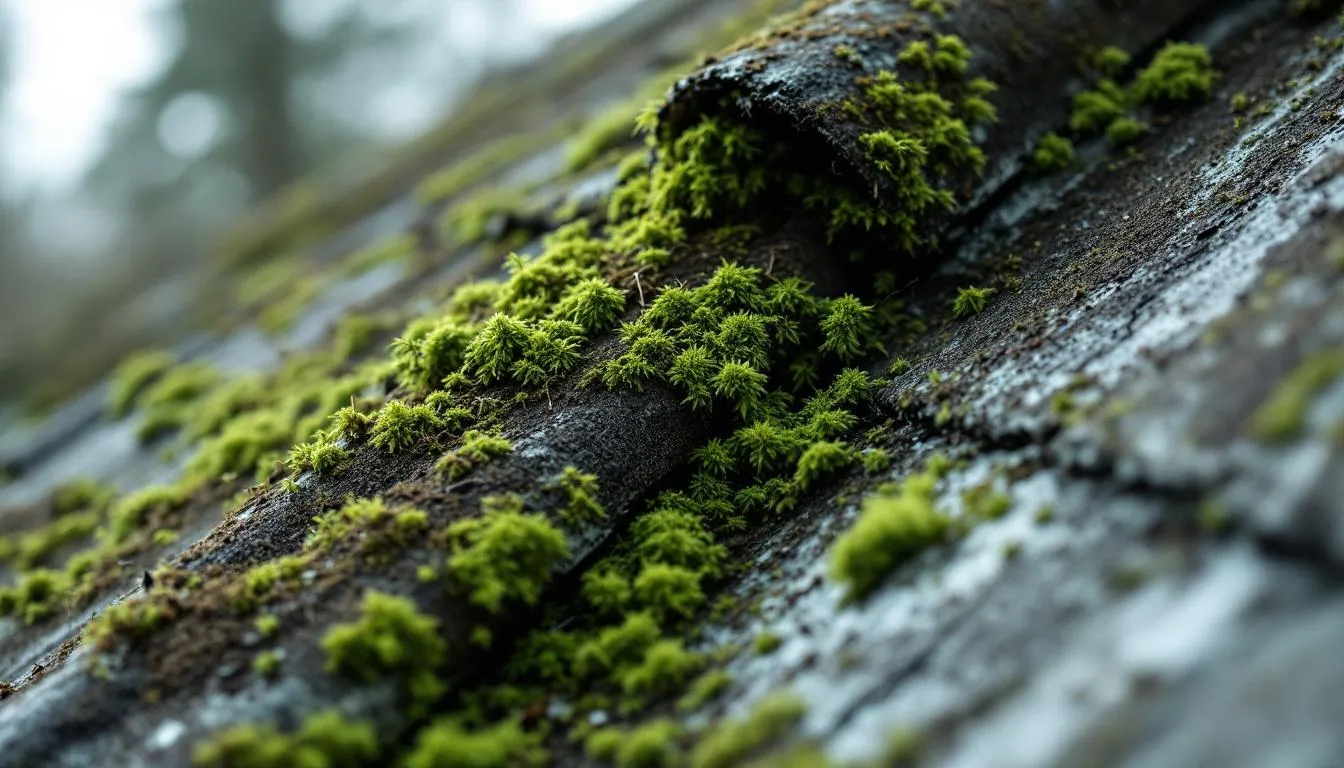
Moss and algae are very common on roofs across greater Charlotte. The humidity, warm temperatures, and shade from the region's dense hardwood canopy create near-perfect growing conditions. Algae shows up as dark gray streaking that most homeowners mistake for dirt. Moss forms a soft green cushion and physically lifts shingle tabs as it grows. Left alone, both moss and algae trap moisture against the shingles and speed up damage to the decking below.
Charlotte Roof Repair Pros helps Charlotte, NC homeowners fix moss and algae roof growth — call for a free inspection.
Quick Answer
Charlotte's humidity and shade from thick hardwood trees make roofs a perfect place for moss and algae to grow. Algae leaves dark gray streaks and moss physically lifts shingle tabs off the roof over time. Both trap moisture against the shingles and speed up rot. Call for an inspection if you see green patches or dark streaking spreading across your roof.
Telltale Signs
Warning Signs to Watch For
- Black, dark gray, or greenish streaks running vertically down the roof slope
- Soft green or brown cushion-like moss mats visible on shingles, particularly on north-facing slopes
- Shingles beneath moss growth feel soft or spongy when pressed
- Granule loss concentrated in areas where biological growth is or was present
- Green or black biological staining on the fascia and upper portions of exterior siding
- Growth appearing primarily in shaded areas under tree canopy or behind dormers
Root Causes
What Causes Moss and Algae Roof Growth?
Persistent Shade and Moisture Retention
Charlotte's urban forest keeps large sections of many roofs in shade all day. Mature water oaks and willow oaks along streets in neighborhoods like Dilworth, Elizabeth, and Wesley Heights are a big part of the problem. Shaded roof planes stay wet for 12 or more hours after a rain event. That steady moisture is exactly what algae and moss need to take hold and spread.
The Fix
Biological Roof Treatment and Tree Management
A low-pressure biocide treatment using diluted sodium hypochlorite or zinc sulfate solution kills the existing growth without harming shingles. Trimming overhanging branches to let in more sun and airflow is the most effective way to keep growth from coming back.
Lack of Algae-Resistant Shingle Granules
Charlotte roofs installed before around 2000 were put on before copper and zinc-impregnated granules became standard. Those older shingles have no chemical defense against Gloeocapsa magma, the most common roof algae species in the humid Southeast. Wind and rain carry spores from nearby trees and neighboring roofs onto the surface. Once a colony gets started on shingles without resistant granules, it spreads fast during Charlotte's warm humid summers. Each season the dark streaking gets wider.
The Fix
Algae-Resistant Shingle Replacement
When biological growth shows up on shingles that are already worn out, re-roofing makes the most sense. New architectural shingles with copper-impregnated granules give you a fresh surface and a slow-release chemical deterrent. Each rain event washes a small amount of copper across the roof to prevent new growth for many years.
Inadequate Roof Slope in Affected Areas
Low-slope roof sections drain slowly and stay wet much longer than steep sections. These areas are common on Charlotte ranch homes, shed dormers, and porch roofs with pitches of 2:12 or less. Rhizoids are the root-like threads moss uses to anchor into the granule layer of a shingle. On a shallow slope, those rhizoids get the extended wet period they need to dig in and hold on. Saturated moss mats also add weight to the sheathing below and push water under lifted shingle tabs.
The Fix
Low-Slope Roofing System Upgrade
Low-slope sections get re-covered with a system built for their pitch. A modified bitumen membrane works well here. It does not hold biological growth as easily as granulated asphalt shingles and drains properly even at minimal slope.
Self-Diagnosis
Which Cause Applies to You?
Check the signs you're observing to narrow down the likely root cause before your inspection.
| What You're Seeing | Persistent Shade and Moisture Retention | Lack of Algae-Resistant Shingle Granules | Inadequate Roof Slope in Affected Areas |
|---|---|---|---|
| Growth concentrated exclusively on north-facing slopes and shaded areas under tree limbs | |||
| Dark algae streaking spread uniformly across all slopes including sunny south-facing planes | |||
| Moss growth heaviest on a low-slope porch or shed roof addition | |||
| Roof is older and neighboring homes of similar age show identical streaking patterns | |||
| Moss returns within one to two seasons after cleaning despite no neighboring source | |||
| Moss mats lifting shingle edges on a barely-sloped section adjacent to a steep clean slope |
Free Quote
Get a free quote in Charlotte
No obligation — tell us what's going on and we'll text you back shortly.
Other Problems
Services That Fix This
Moss and Algae Roof Growth Near You
Also Helpful